The key to a beautiful landscape is a healthy lawn. Keeping a lawn in tip-top shape and avoiding a patchy lawn is imperative for all homeowners. Regular mowing, fertilizer application, aerating periodically, and pest control are some of the maintenance activities that keep the lawn beautiful. Even then, sometimes lawns still end up being thin, bare, and patchy.
A patchy lawn is every homeowner’s nightmare. No matter how beautiful a landscape is, as long as the lawn has patches, it looks flawed. Luckily, Summit Turf Services is here to help. With this comprehensive guide, greening up a yard can be easy. Here’s all one needs to do to enjoy a consistent lush green carpet:
Identifying Issues of Patchy Lawn
The first step a doctor takes before offering prescription drugs is to examine the patient. The same goes for a ‘sick’ lawn. Before running for DIY solutions to patchy lawns, identify the root cause of the problem. Patchy, thin grass is usually an indicator of a bigger problem. Some common causes for thin grass are:
Insufficient watering and fertilizer
Plants need water and nutrients for optimum performance. Fertilizer provides potassium, phosphorus, and nitrogen, which are essential for lawns to stay in top condition. Watering also goes a long way in keeping grass healthy.
Hard soil
When the soil is too hard, perhaps from compaction, the roots are unable to penetrate. Because of the hard soil, they do not get water and nutrients, then the lawn tends to thin out. Regular aeration is needed in this case.

Pest and disease
Grubs, Asian lady beetles, and lawn infections like powdery mildew can result in empty patches on the lawn.
Shade
Not all species of grasses do well under the shade. Most of them, in fact, need at least 6 hours of direct sunlight for optimum performance. When grown under a shade, the grass struggles to access sunlight. Instead of spreading on the ground, it grows long and stringy. This results in empty patches.
Other Causes of Patchy Grass
There are many other causes of patchy grass. Other causes include physical abrasion, scorching by fertilizers, poor mowing, and negligence. Proper lawn care practices will often ensure that the lawn looks great throughout the year. Soil amendments and other techniques can rejuvenate a patchy lawn.
Fixing a Patchy Lawn
After knowing the underlying cause of the problem, thin lawns can be successfully controlled. First, the root of the problem should be addressed, either by aeration, mowing, pesticide application, and so on.
To fix large thin lawn areas, re-seeding is needed to revitalize the grass. Re-seeding begins with ground preparation. It involves raking the ground to loosen the soil and remove debris. Following this, the seeds should be sprinkled all over the large patchy areas.
Afterward, the seeds are then covered with about half an inch of topsoil or compost. Raking should then be done gently to increase the contact between the soil and the seeds. Last but not least, the grass needs regular watering.
Watering early in the morning and evening is recommended. One should, however, be careful not to overwater. This may bury the seeds, preventing them from germinating. For large thin sections, reseeding may be carried out all over the entire lawn.

Fixing Small Sections of Lawn – Spot Fixing
For smaller bald sections, spot-fixing should be followed. It basically involves the same principles as those discussed before. The only difference here is that the process is applied to a specific cut-out section. As such, one should cut the area with the dead turf then lift off the debris using a spade. Ensure that a thin layer of soil also comes out to leave the section completely clean.
From here, replace the lost soil with some fresh topsoil or compost. Level the area, then sprinkle the seeds and rake them gently. Lastly, cover the seeds with mulch and remember to water. Unlike reseeding over a large area, spot-fixing increases the risk of seeds being eaten by birds or blown away. This is why mulching is important. Mulching also increases soil moisture, boosting growth.
After Fixing Patchy Grass in the Lawn, It’s Time to Think About:
Weeds and Pests Control
As long as there are weeds in the lawn, the grass has stiff competition. Weeds tend to be extremely hardy and thrive very easily. They could, therefore, smother the seeds before they mature. The same goes for pests. Pests can make all efforts go to waste if not properly controlled.
Post-emergent weed killers and pesticides will do the trick. Weed preventers will also take care of the problem before it shows up. Be cautious when using pre-emergent weed preventers since they may prevent the grass seed from germinating. Pests like grubs can also be prevented before they attack the lawn.
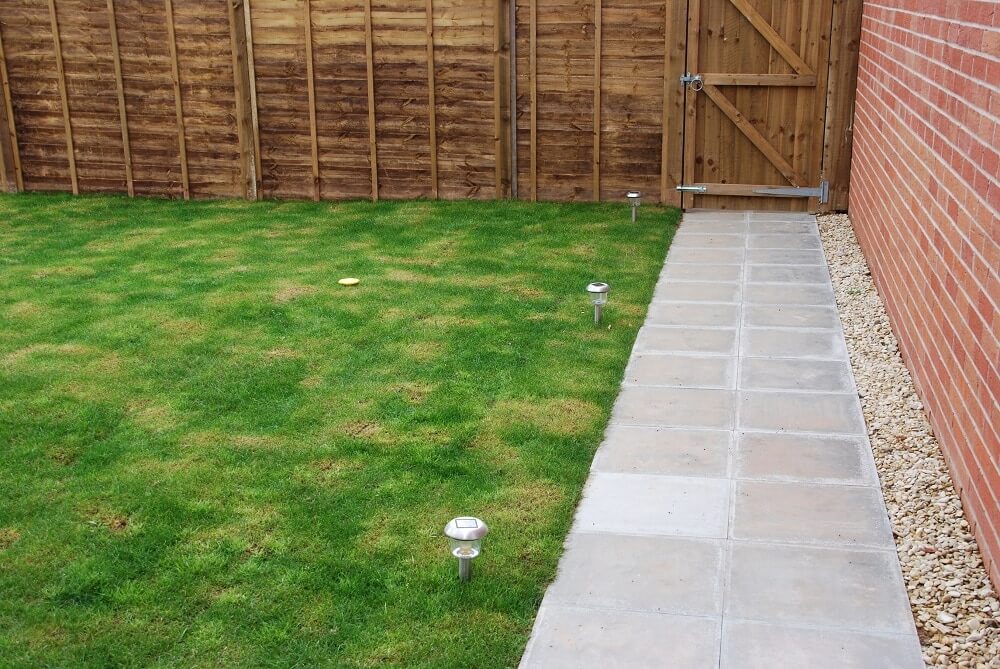
Watering and Repairing Your Lawn
Regular watering encourages the roots to grow deeper. It also keeps the soil moist, to provide the necessary moisture needed for function and growth. The amount of water should be increased until the grass is about 4″ tall.
From here, watering can be minimized to 1 or 2 times a week. During this time, more water, enough to soak the lawn should be applied. This encourages root growth, which ensures that the grass has access to water and nutrients throughout the year.
Proper Fertilization
Just like the body needs water and food, so do lawns. Grass should be fed for it to sprout and sufficiently take root. Organic fertilizer like Milorganite should be applied 7 weeks after reseeding. From here, fertilization can be repeated after every 2 months. Keep the yard nutrient-rich and say goodbye to bald patches!
Mowing
Proper lawn mowing is essential to a healthy lawn. It encourages the grass to spread and rejuvenates the grass by triggering re-growth. More so, the cut grasses add nutrients to the soil. Remember to wait until the grass is at a mowing height (3½ to 4 inches) before mowing.
Besides this, the frequency of cutting grass should depend on the season and how fast the grass grows. Summit Turf Services can give the best recommendation for this based on the climate and state of a yard.
Fix Patchy Grass Today
Gone are the days when patchy grass was a nightmare. With these simple processes, anyone can revitalize their landscape. In case of any queries, or anything one is unsure about, it’s always best to contact your local lawn care specialists at Summit Turf Services. We provide the best remedies, techniques, and more to rejuvenate a patchy lawn. Get in touch with us today!